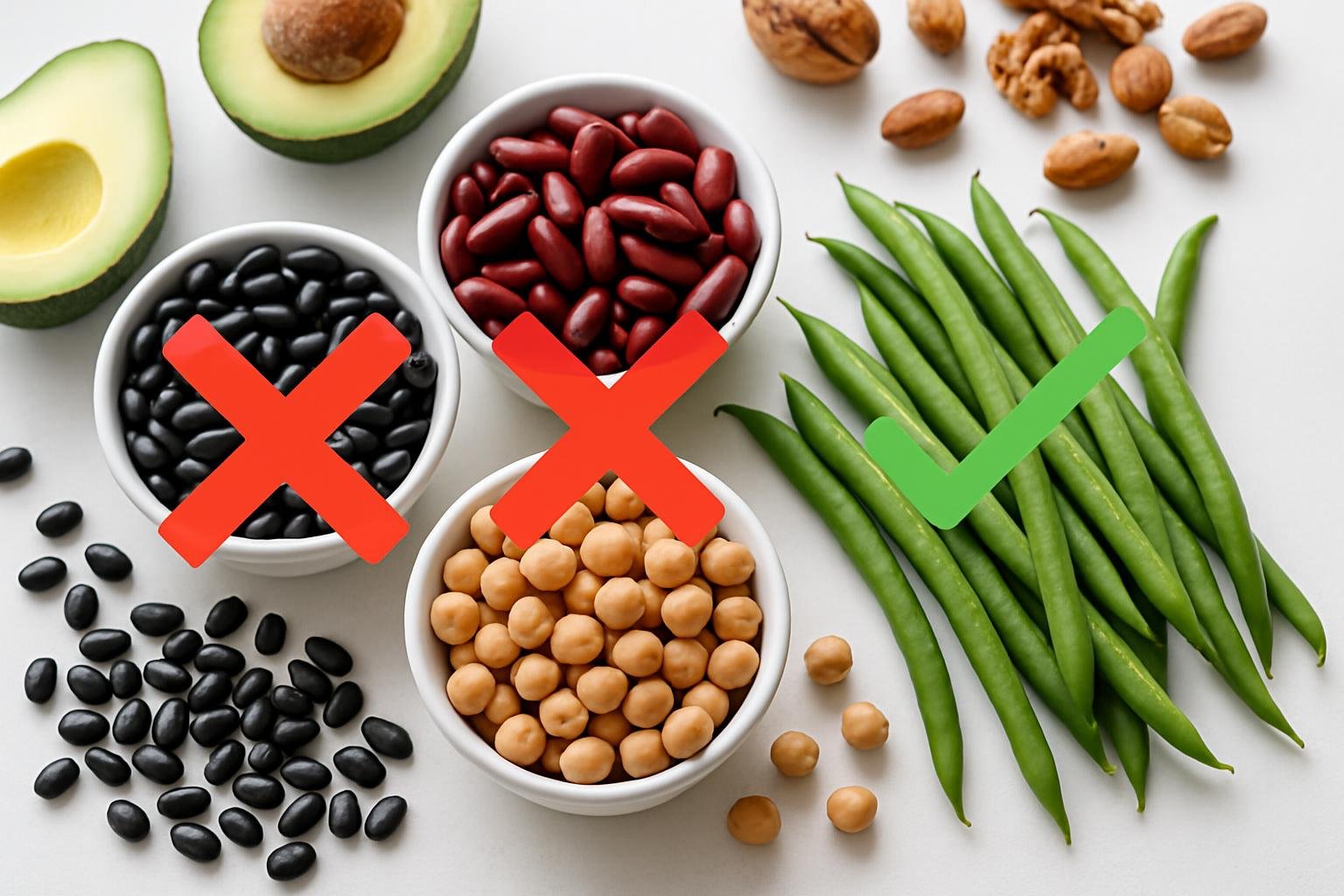
If you’ve been on the keto diet for any length of time, you’ve probably noticed that eggs and dairy dominate most breakfast recommendations.
Scrambled eggs, cheese-filled omelets, and cream-laden coffee seem to be the standard morning fare for those following a ketogenic lifestyle. But what if eggs and dairy aren’t options for you?
Whether you’re dealing with food allergies, sensitivities, ethical dietary choices, or simply looking to add more variety to your keto journey, finding satisfying breakfast options without eggs and dairy can feel like an impossible challenge. The good news? It’s absolutely possible to enjoy delicious, satisfying, and nutritionally complete keto breakfasts without relying on these common ingredients.
In this comprehensive guide, I’m sharing a complete 7-day meal plan featuring egg-free and dairy-free keto breakfast recipes that will keep you in ketosis while respecting your dietary needs. Each recipe is carefully crafted to provide the high-fat, moderate-protein, and low-carb macronutrient profile that makes keto so effective for many people.
Understanding Dietary Restrictions on Keto
The ketogenic diet is traditionally heavy on animal products, with eggs and dairy being convenient sources of fat and protein with minimal carbohydrates.
When these food groups are removed from the equation, many people struggle to maintain the proper macronutrient balance that keeps them in ketosis.
Common Challenges of Keto Without Eggs and Dairy
- Finding adequate fat sources: Eggs and dairy provide concentrated sources of fat that are easy to incorporate into meals. Without them, you need to be more intentional about including other healthy fats.
- Maintaining protein levels: Eggs are a complete protein source that’s simple to prepare. Finding alternative complete proteins that are quick to make can be challenging.
- Creating satisfying textures: Eggs and dairy contribute significantly to the texture of many keto recipes. Creating similar mouthfeel without these ingredients requires creativity.
- Convenience factor: Let’s face it—eggs are quick and easy to prepare. Finding equally convenient alternatives takes some planning.
- Staying within carb limits: Some plant-based alternatives to animal products contain more carbohydrates, making it trickier to stay within keto macros.
Nutritional Considerations
When planning egg-free and dairy-free keto breakfasts, it’s important to ensure you’re still getting adequate:
- Healthy fats: Aim for 70-75% of your calories from fat sources like avocados, coconut, olives, nuts, and seeds.
- Complete proteins: Without animal products, combining different plant proteins becomes more important to get all essential amino acids.
- Essential nutrients: Eggs and dairy provide important nutrients like vitamin B12, vitamin D, calcium, and zinc. You’ll need to ensure you’re getting these from other sources or supplements.
- Fiber: Plant-based keto options often provide more fiber, which is beneficial for gut health and can help prevent the constipation that sometimes accompanies keto diets.
Benefits of Egg-Free and Dairy-Free Keto Options
While removing eggs and dairy might initially seem limiting, there are actually numerous benefits to exploring these alternative breakfast options:
1. Reduced Inflammation
Many people experience inflammation from eggs and dairy without realizing it. Common symptoms include digestive discomfort, skin issues, congestion, and joint pain. Removing these potential inflammatory triggers can lead to:
- Clearer skin
- Improved digestion
- Reduced bloating
- Better respiratory health
- Decreased joint pain
Even if you don’t have a diagnosed allergy, you might notice improvements in these areas when taking a break from eggs and dairy.
2. Allergy-Friendly Options
For those with diagnosed allergies or intolerances, having reliable egg-free and dairy-free recipes is essential. Food allergies affect approximately 32 million Americans, with eggs and milk being among the “Big Eight” most common allergens. Having a repertoire of safe recipes can:
- Prevent dangerous allergic reactions
- Reduce anxiety around food choices
- Make meal planning less stressful
- Allow for inclusive family meals
3. More Plant-Based Nutrients and Fiber
Plant-focused keto breakfasts often incorporate ingredients that provide beneficial compounds not found in animal products:
- Phytonutrients: Plant compounds with antioxidant and anti-inflammatory properties
- Fiber: Supports gut health and helps maintain healthy blood sugar levels
- Diverse micronutrients: Different plant foods offer varied vitamin and mineral profiles
- Prebiotics: Feed beneficial gut bacteria, supporting overall health
4. Greater Diet Variety
Expanding your breakfast options beyond eggs and dairy introduces you to new flavors, textures, and culinary experiences:
- Prevents diet boredom and fatigue
- Introduces new favorite foods
- Develops cooking skills and creativity
- Makes the keto diet more sustainable long-term
5. Environmental and Ethical Considerations
For those concerned about environmental impact or animal welfare, reducing consumption of animal products aligns with personal values while still maintaining a ketogenic lifestyle.
Key Ingredients for Egg-Free, Dairy-Free Keto Breakfasts
The foundation of successful egg-free and dairy-free keto breakfasts lies in understanding which ingredients can provide similar nutritional benefits and culinary functions. Here are the staples you’ll want to keep on hand:
Plant-Based Fat Sources
- Avocados
- Coconut (oil, butter, cream, milk, flakes)
- Olives and olive oil
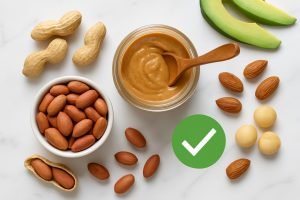
- Nuts (macadamias, walnuts, pecans, almonds)
- Seeds (chia, flax, hemp, pumpkin, sunflower)
- Nut and seed butters
Protein Sources Without Eggs/Dairy
- Hemp hearts (complete protein)
- Plant-based protein powders (look for low-carb options)
- Nuts and seeds
- Tempeh (in moderation due to carb content)
- Animal proteins (if not vegan): bacon, sausage, smoked salmon
Fiber-Rich Ingredients
- Flaxseed meal
- Psyllium husk
- Coconut flour
- Chia seeds
- Low-carb vegetables
Egg Replacers for Baking
- Flax eggs (1 Tbsp ground flaxseed + 3 Tbsp water)
- Chia eggs (1 Tbsp chia seeds + 3 Tbsp water)
- Psyllium gel (1 tsp psyllium husk powder + 3 Tbsp water)
Dairy Alternatives
- Coconut milk, cream, and yogurt
- Almond milk (unsweetened)
- Cashew cream (in small amounts)
- Nutritional yeast (for cheesy flavor)
With these foundational ingredients, you’ll be well-equipped to create satisfying, nutritious keto breakfasts without eggs or dairy. The 7-day meal plan that follows will show you exactly how to put these ingredients to work in delicious morning recipes that will keep you energized and in ketosis.
7-Day Meal Plan Overview
This 7-day meal plan is designed to provide variety, nutrition, and satisfaction while keeping you in ketosis—all without eggs or dairy. Each breakfast contains:
- 70-75% calories from healthy fats
- 20-25% calories from protein
- 5-10% calories from net carbs (typically 5-8g net carbs per meal)
- Adequate fiber for digestive health
Let’s dive into the daily recipes!
Day 1: Chocolate Chia Pudding
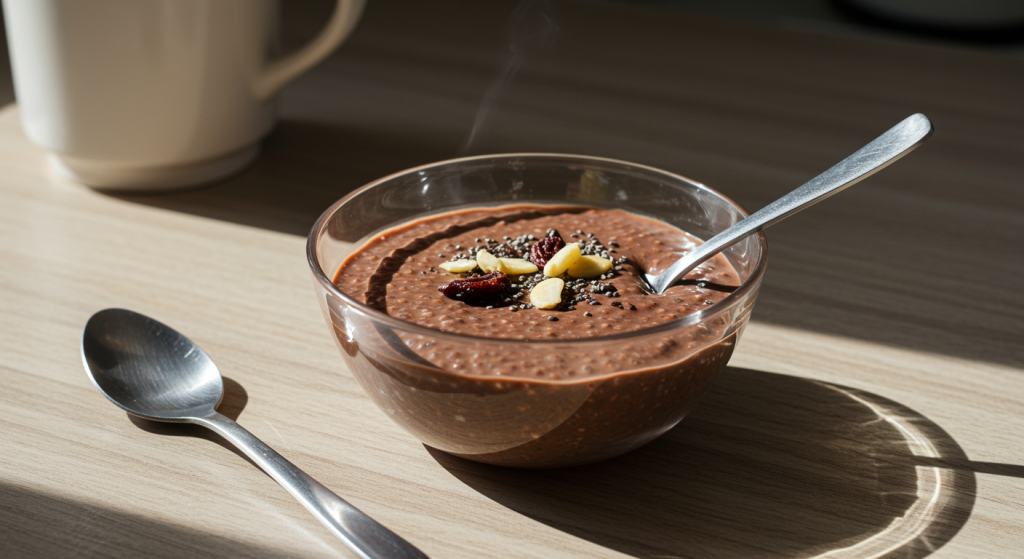
Start your week with this simple yet satisfying chocolate chia pudding that you can prepare the night before.
Ingredients (1 serving):
- 3 tablespoons chia seeds
- 1 cup unsweetened coconut milk (from a carton, not canned)
- 1 tablespoon unsweetened cocoa powder
- 1 tablespoon granulated erythritol or monk fruit sweetener
- ¼ teaspoon vanilla extract
- Pinch of salt
- Optional toppings: 1 tablespoon unsweetened coconut flakes, 5 raspberries, or 1 tablespoon chopped macadamia nuts
Instructions:
- In a mason jar or container with a lid, combine chia seeds, coconut milk, cocoa powder, sweetener, vanilla extract, and salt.
- Whisk thoroughly until cocoa powder is fully incorporated with no lumps.
- Secure the lid and refrigerate overnight or for at least 4 hours.
- In the morning, stir the pudding and add a splash more coconut milk if it’s too thick.
- Top with optional toppings and enjoy!
Nutritional Information (without toppings):
- Calories: 290
- Fat: 22g (68% of calories)
- Protein: 9g (12% of calories)
- Total Carbs: 18g
- Fiber: 15g
- Net Carbs: 3g
- Preparation time: 5 minutes (plus overnight setting)
Make-Ahead Tips:
- Prepare up to 3 days in advance
- Store in airtight containers in the refrigerator
- Add toppings just before serving
Day 2: Keto Granola with Coconut Yogurt
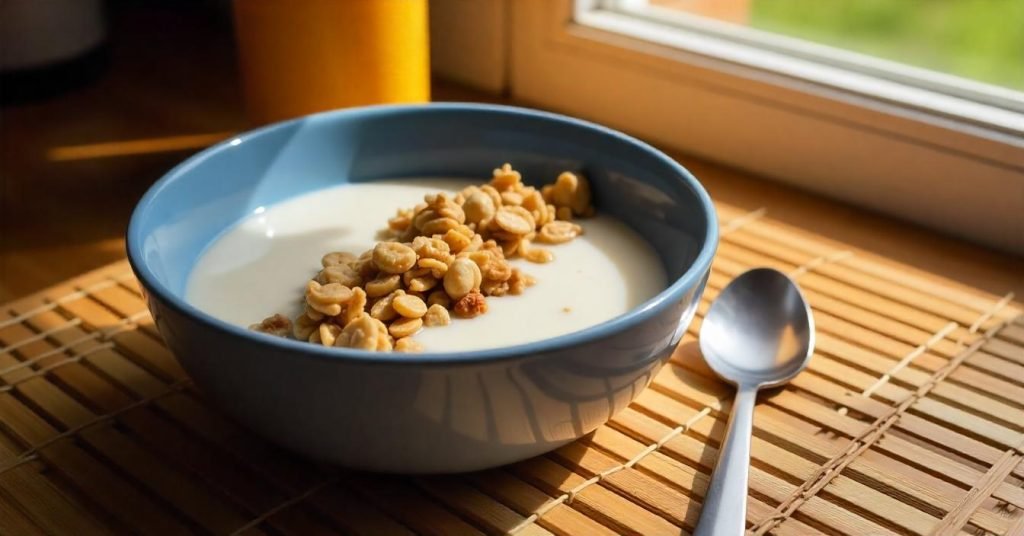
This crunchy, satisfying granola paired with creamy coconut yogurt provides a perfect contrast of textures.
Ingredients for Granola (makes 5 servings):
- 1 cup raw mixed nuts (macadamias, almonds, walnuts, pecans)
- ¼ cup pumpkin seeds
- ¼ cup sunflower seeds
- ¼ cup unsweetened coconut flakes
- 2 tablespoons ground flaxseed
- 2 tablespoons granulated erythritol or monk fruit sweetener
- 1 teaspoon cinnamon
- ¼ teaspoon salt
- 3 tablespoons coconut oil, melted
- 1 teaspoon vanilla extract
Ingredients for Serving (1 serving):
- ⅓ cup homemade granola
- ½ cup unsweetened coconut yogurt
- 3-4 berries (strawberries, raspberries, or blackberries)
Instructions for Granola:
- Preheat oven to 300°F (150°C) and line a baking sheet with parchment paper.
- Roughly chop the nuts into smaller pieces.
- In a large bowl, combine all dry ingredients and mix well.
- Add melted coconut oil and vanilla extract, stirring until everything is well coated.
- Spread mixture evenly on the prepared baking sheet.
- Bake for 20-25 minutes, stirring halfway through, until golden brown.
- Allow to cool completely (it will crisp up as it cools).
- Store in an airtight container.
For Serving:
- Place coconut yogurt in a bowl.
- Top with ⅓ cup of granola.
- Add berries on top.
Nutritional Information (per serving with yogurt):
- Calories: 380
- Fat: 33g (78% of calories)
- Protein: 8g (8% of calories)
- Total Carbs: 14g
- Fiber: 8g
- Net Carbs: 6g
- Preparation time: 30 minutes for granola (can be made in advance)
Storage Tips:
- Granola stays fresh in an airtight container for up to 2 weeks
- Store in a cool, dry place
Day 3: Coconut Flour Pancakes
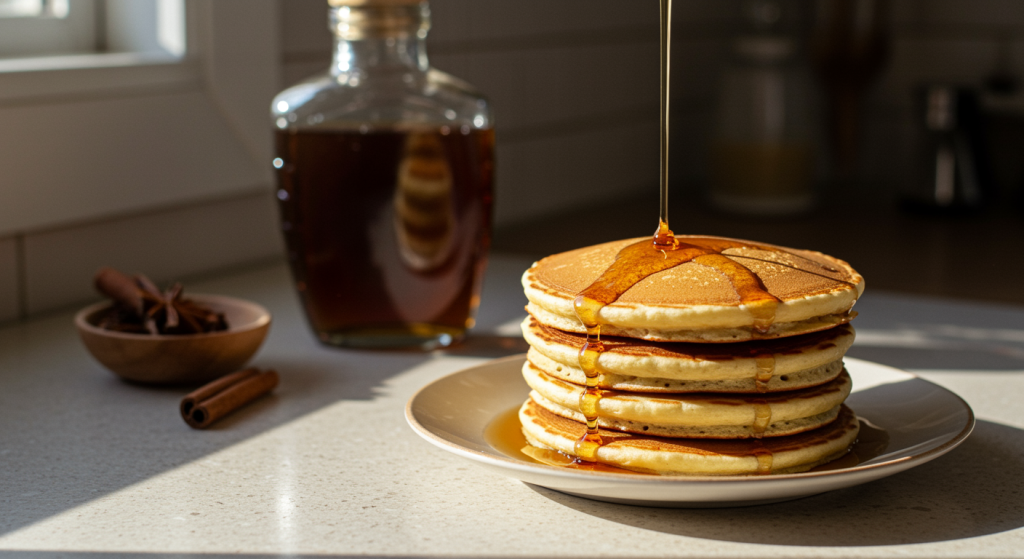
These fluffy pancakes will satisfy your craving for a traditional breakfast without eggs or dairy.
Ingredients (makes 4 small pancakes, 1 serving):
- 3 tablespoons coconut flour
- 1 tablespoon ground flaxseed
- 1 teaspoon psyllium husk powder
- ½ teaspoon baking powder
- Pinch of salt
- ½ cup unsweetened almond milk
- 1 tablespoon coconut oil, plus more for cooking
- ½ teaspoon vanilla extract
- 1 tablespoon granulated erythritol or monk fruit sweetener
- Optional toppings: sugar-free syrup, nut butter, or a few berries
Instructions:
- In a bowl, mix coconut flour, ground flaxseed, psyllium husk powder, baking powder, and salt.
- In a separate bowl, whisk together almond milk, coconut oil, vanilla extract, and sweetener.
- Pour wet ingredients into dry ingredients and mix until well combined. Let the batter sit for 5 minutes to thicken.
- Heat a non-stick pan over medium-low heat and add a small amount of coconut oil.
- Pour small circles of batter (about 2-3 tablespoons each) into the pan.
- Cook for 3-4 minutes until bubbles form on the surface, then carefully flip and cook for another 2-3 minutes.
- Serve with optional toppings.
Nutritional Information (pancakes only):
- Calories: 290
- Fat: 22g (68% of calories)
- Protein: 7g (10% of calories)
- Total Carbs: 18g
- Fiber: 12g
- Net Carbs: 6g
- Preparation time: 20 minutes
Cooking Tips:
- Keep pancakes small for easier flipping
- Cook on medium-low heat to prevent burning
- Be patient when cooking the first side—wait until bubbles form and edges look set
Day 4: Avocado Smoothie Bowl
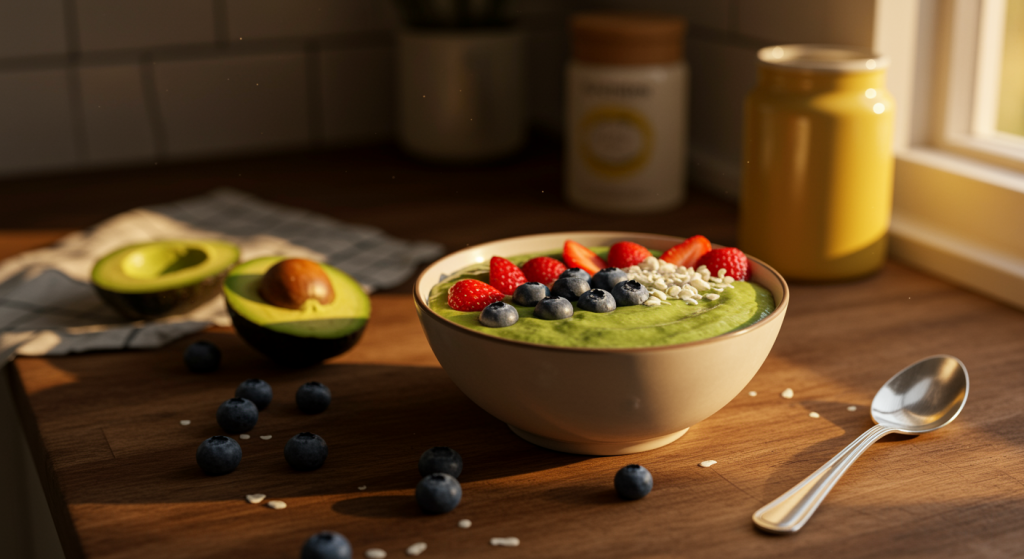
This creamy, nutrient-dense smoothie bowl is perfect for days when you want something refreshing yet filling.
Ingredients (1 serving):
- ½ medium avocado
- ¼ cup full-fat coconut milk (canned)
- ¼ cup unsweetened almond milk
- 1 tablespoon hemp hearts
- 1 tablespoon MCT oil or coconut oil
- 1 tablespoon granulated erythritol or monk fruit sweetener
- ¼ teaspoon vanilla extract
- Pinch of salt
- 3-4 ice cubes
Toppings (choose 2-3):
- 1 tablespoon unsweetened coconut flakes
- 1 tablespoon hemp hearts
- 1 tablespoon chopped nuts
- 5 berries (strawberries, raspberries, or blackberries)
- ½ tablespoon nut butter
Instructions:
- Place all ingredients except toppings in a high-speed blender.
- Blend until smooth and creamy, adding more almond milk if needed to achieve desired consistency.
- Pour into a bowl and add toppings.
- Eat immediately with a spoon.
Nutritional Information (without toppings):
- Calories: 350
- Fat: 33g (85% of calories)
- Protein: 6g (7% of calories)
- Total Carbs: 10g
- Fiber: 7g
- Net Carbs: 3g
- Preparation time: 5-10 minutes
Variations:
- Add 1 tablespoon unsweetened cocoa powder for a chocolate version
- Add ¼ teaspoon matcha powder for a green tea version
- Add ¼ teaspoon cinnamon and a pinch of nutmeg for a spiced version
Day 5: Savory Breakfast Bowl
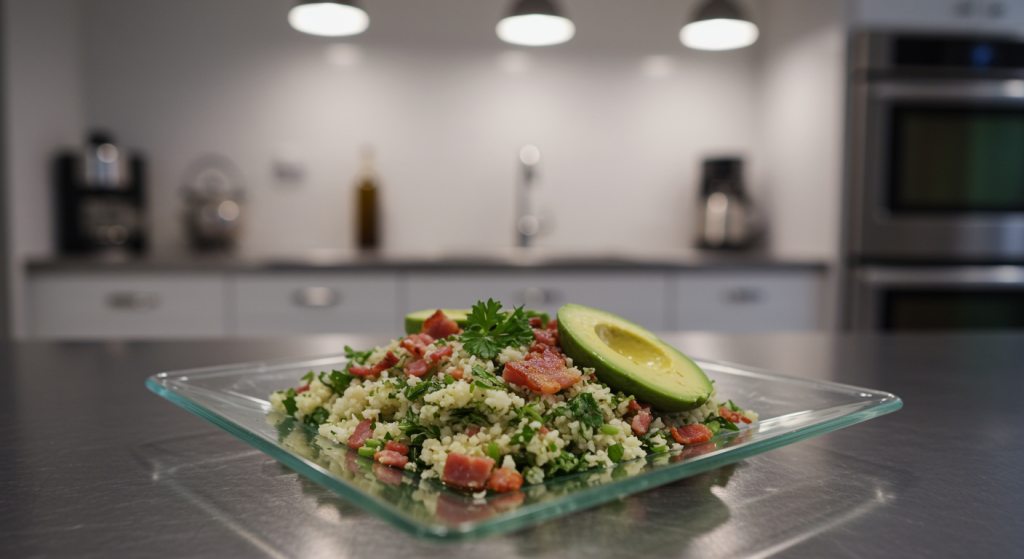
A hearty, savory option that proves breakfast doesn’t have to be sweet.
Ingredients (1 serving):
- 2 cups cauliflower rice
- 2 tablespoons coconut oil, divided
- 2 tablespoons diced onion
- ¼ cup diced bell pepper
- ½ cup diced zucchini
- 1 clove garlic, minced
- ½ teaspoon smoked paprika
- ¼ teaspoon cumin
- Salt and pepper to taste
- ½ avocado, sliced
- 1 tablespoon olive oil
- 1 tablespoon pumpkin seeds
- Optional: 2 oz cooked bacon or breakfast sausage (if not vegan)
Instructions:
- Heat 1 tablespoon coconut oil in a large skillet over medium heat.
- Add onion and cook until translucent, about 3 minutes.
- Add bell pepper, zucchini, and garlic, cooking until vegetables are tender, about 5 minutes.
- Remove vegetables from pan and set aside.
- Add remaining 1 tablespoon coconut oil to the pan.
- Add cauliflower rice, smoked paprika, cumin, salt, and pepper.
- Cook until cauliflower rice is tender, about 5-7 minutes.
- Return vegetables to the pan and mix well.
- Transfer to a bowl and top with sliced avocado, a drizzle of olive oil, and pumpkin seeds.
- Add cooked bacon or sausage if using.
Nutritional Information (without optional meat):
- Calories: 420
- Fat: 38g (81% of calories)
- Protein: 7g (7% of calories)
- Total Carbs: 16g
- Fiber: 9g
- Net Carbs: 7g
- Preparation time: 20 minutes
Meal Prep Tips:
- Pre-chop vegetables and store in the refrigerator
- Use frozen cauliflower rice to save time
- Can be made ahead and reheated (except avocado, which should be added fresh)
Day 6: Keto “Noatmeal” (No-Oat Oatmeal)
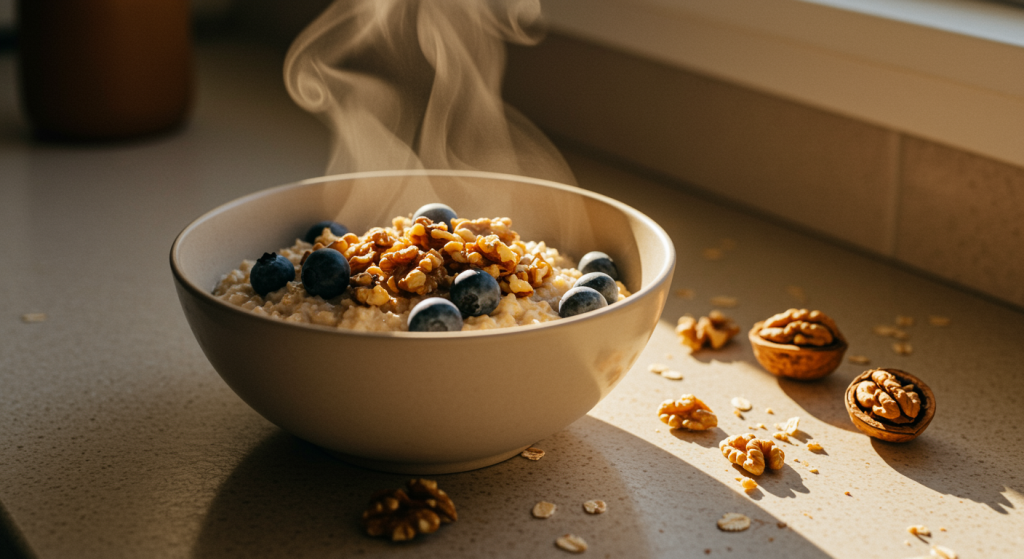
This warm, comforting breakfast mimics traditional oatmeal but without the carbs.
Ingredients (1 serving):
- 2 tablespoons ground flaxseed
- 2 tablespoons hemp hearts
- 2 tablespoons unsweetened shredded coconut
- 1 tablespoon chia seeds
- ¾ cup unsweetened almond milk
- 1 tablespoon coconut oil or MCT oil
- 1 tablespoon granulated erythritol or monk fruit sweetener
- ¼ teaspoon cinnamon
- Pinch of salt
- ¼ teaspoon vanilla extract
Optional Toppings:
- 1 tablespoon nut butter
- 1 tablespoon chopped nuts
- 5 berries (strawberries, raspberries, or blackberries)
- 1 tablespoon unsweetened coconut flakes
Instructions:
- In a small saucepan, combine ground flaxseed, hemp hearts, shredded coconut, chia seeds, almond milk, coconut oil, sweetener, cinnamon, and salt.
- Bring to a simmer over medium-low heat, stirring frequently.
- Cook for 3-5 minutes until thickened to desired consistency.
- Remove from heat and stir in vanilla extract.
- Transfer to a bowl and add optional toppings.
Nutritional Information (without toppings):
- Calories: 380
- Fat: 33g (78% of calories)
- Protein: 12g (13% of calories)
- Total Carbs: 12g
- Fiber: 10g
- Net Carbs: 2g
- Preparation time: 10 minutes
Variations:
- Add 1 tablespoon unsweetened cocoa powder for chocolate flavor
- Add ¼ teaspoon pumpkin pie spice for a fall-inspired version
- Use coconut milk instead of almond milk for extra creaminess
Day 7: Weekend Special – Keto Breakfast Hash
End the week with this satisfying, customizable breakfast hash that’s perfect for a leisurely weekend morning.
Ingredients (1 serving):
- 2 tablespoons coconut oil
- ¼ cup diced radishes
- ¼ cup diced turnip or jicama
- 2 tablespoons diced onion
- ¼ cup diced bell pepper
- 1 cup chopped kale or spinach
- 1 clove garlic, minced
- ½ teaspoon dried herbs (rosemary, thyme, or herbs de Provence)
- Salt and pepper to taste
- ½ avocado, sliced
- 1 tablespoon olive oil
- 1 tablespoon nutritional yeast (for cheesy flavor)
- Optional: 2 oz cooked bacon, breakfast sausage, or tempeh (if not strict keto)
Instructions:
- Heat coconut oil in a large skillet over medium heat.
- Add radishes and turnip/jicama, cooking for 5-7 minutes until they begin to soften.
- Add onion and bell pepper, cooking for another 3-4 minutes.
- Add kale/spinach and garlic, cooking until greens are wilted.
- Season with herbs, salt, and pepper.
- Transfer to a plate and top with sliced avocado, a drizzle of olive oil, and nutritional yeast.
- Add optional protein if using.
Nutritional Information (without optional protein):
- Calories: 400
- Fat: 37g (83% of calories)
- Protein: 6g (6% of calories)
- Total Carbs: 15g
- Fiber: 9g
- Net Carbs: 6g
- Preparation time: 25 minutes
Customization Tips:
- Use any low-carb vegetables you have on hand
- Add different herbs and spices to change the flavor profile
- Can be made in larger batches for multiple servings
Complete Shopping List for 7-Day Meal Plan
Nuts and Seeds
- Chia seeds (1 cup)
- Ground flaxseed (1 cup)
- Hemp hearts (1 cup)
- Pumpkin seeds (1/2 cup)
- Sunflower seeds (1/2 cup)
- Mixed nuts (macadamias, almonds, walnuts, pecans) (2 cups)
- Psyllium husk powder (1 small container)
Oils and Fats
- Coconut oil (1 jar)
- MCT oil (optional, 1 small bottle)
- Olive oil (1 bottle)
- Avocados (4 medium)
- Nut butter of choice (1 jar, unsweetened)
Non-Dairy Milk and Yogurt
- Unsweetened almond milk (2 cartons)
- Unsweetened coconut milk from carton (1 carton)
- Canned full-fat coconut milk (1 can)
- Unsweetened coconut yogurt (1 container)
Flours and Baking Needs
- Coconut flour (1 small bag)
- Baking powder (1 container)
- Vanilla extract (1 small bottle)
- Granulated erythritol or monk fruit sweetener (1 bag)
- Unsweetened cocoa powder (1 container)
Produce
- Cauliflower (1 head or 1 bag pre-riced)
- Bell peppers (2)
- Zucchini (1)
- Onion (1)
- Garlic (1 head)
- Kale or spinach (1 bunch)
- Radishes (1 bunch)
- Turnip or jicama (1 small)
- Berries (strawberries, raspberries, or blackberries) (1 small container)
Pantry Items
- Unsweetened coconut flakes (1 bag)
- Nutritional yeast (1 small container)
- Salt
- Pepper
- Cinnamon
- Smoked paprika
- Cumin
- Dried herbs (rosemary, thyme, or herbs de Provence)
Optional Protein (if not vegan)
- Bacon
- Breakfast sausage
Meal Prep Guide
Weekend Prep (1-2 hours)
Spending a couple of hours on meal prep during the weekend can save you significant time during the busy week. Here’s what you can prepare in advance:
Make Ahead Items:
- Keto Granola (for Day 2)
- Make the full batch and store in an airtight container
- Will stay fresh for up to 2 weeks
- Chia Pudding Base (for Day 1)
- Prepare 2-3 servings and store in individual containers
- Will stay fresh for 3-4 days in the refrigerator
- Chop Vegetables
- Dice onions, bell peppers, and zucchini
- Store in airtight containers in the refrigerator
- Will stay fresh for 3-4 days
- Pre-measure Dry Ingredients
- For pancakes (Day 3): Combine coconut flour, ground flaxseed, psyllium husk powder, baking powder, and salt in a container
- For “noatmeal” (Day 6): Combine ground flaxseed, hemp hearts, shredded coconut, and chia seeds in a container
- Cauliflower Rice (for Day 5)
- If using fresh cauliflower, process into rice and store in an airtight container
- Will stay fresh for 3-4 days in the refrigerator
Storage Recommendations
- Nuts and Seeds
- Store in airtight containers in a cool, dry place
- For longer freshness, keep in the refrigerator
- Ground flaxseed should always be refrigerated to prevent rancidity
- Prepared Items
- Use glass containers with tight-fitting lids for prepared foods
- Label with contents and date prepared
- Store chia pudding and other wet items on lower shelves of the refrigerator
- Store granola and dry mixes in pantry or upper shelves
- Avocados
- Buy at varying ripeness levels
- Store unripe avocados at room temperature
- Once ripe, refrigerate to slow further ripening
- Cut avocados should be stored with the pit, sprinkled with lemon juice, and wrapped tightly
Reheating Tips
- Savory Breakfast Bowl and Hash
- Reheat in a skillet over medium heat for 3-5 minutes
- Add a splash of water or broth if needed to prevent drying out
- Add fresh avocado after reheating
- “Noatmeal”
- Reheat in a small saucepan over low heat
- Add additional liquid as needed to reach desired consistency
- Stir frequently to prevent sticking
- Pancakes
- Reheat in a toaster on low setting
- Alternatively, warm in a dry skillet over low heat for 1-2 minutes per side
- Can also be enjoyed cold
Time-Saving Strategies
- Batch Cooking
- Double recipes when possible to have leftovers
- The savory breakfast bowl and hash can be made in larger quantities and reheated throughout the week
- Simplified Versions
- For busy mornings, simplify recipes by reducing the number of toppings or mix-ins
- Keep pre-portioned smoothie ingredients in freezer bags for quick blending
- Night-Before Preparation
- Set out non-perishable ingredients and cooking tools the night before
- Prepare overnight items like chia pudding before bed
- Fill blender jar with non-perishable smoothie ingredients and refrigerate overnight
- Smart Substitutions
- Use frozen cauliflower rice instead of fresh
- Use pre-chopped frozen vegetables for the savory dishes
- Keep frozen avocado chunks on hand for smoothie bowls when fresh aren’t available
Troubleshooting and FAQs
Common Issues with Egg-Free and Dairy-Free Recipes
- Pancakes falling apart
- Solution: Let batter rest longer to allow psyllium and flax to gel properly
- Make pancakes smaller for easier flipping
- Ensure pan is properly preheated before cooking
- Chia pudding too thick or thin
- Too thick: Add more liquid 1 tablespoon at a time
- Too thin: Add more chia seeds 1 teaspoon at a time and allow to set longer
- Granola not crisping up
- Ensure oven temperature is accurate
- Spread mixture in a thin, even layer on baking sheet
- Allow to cool completely before storing (it crisps as it cools)
- “Noatmeal” too gummy
- Reduce cooking time
- Add more hemp hearts for better texture
- Ensure you’re stirring frequently during cooking
Substitution Options
- Nut allergies
- Replace almond milk with coconut milk
- Replace nuts in granola with additional seeds
- Use seed butters instead of nut butters
- Coconut allergies
- Replace coconut oil with avocado oil
- Replace coconut milk with other plant-based milks
- Replace coconut flakes with additional nuts or seeds
- Sweetener options
- Erythritol and monk fruit can be used interchangeably
- Stevia can be substituted (use much less, according to package directions)
- Allulose is another good option for those who experience digestive issues with sugar alcohols
- Low FODMAP needs
- Omit garlic and onions
- Use only the green parts of green onions
- Limit avocado to 1/4 per serving
Frequently Asked Questions
- Will these recipes keep me in ketosis?
- Yes, all recipes are designed to be keto-friendly with 2-7g net carbs per serving
- Individual carb tolerance varies, so monitor your ketone levels if you’re concerned
- Can I meal prep all breakfasts for the week?
- Some items like granola and chia pudding can be made 3-7 days ahead
- Pancakes can be made 2-3 days ahead
- Smoothie ingredients can be prepped but should be blended fresh
- Savory dishes can be prepped 3-4 days ahead (add fresh avocado when serving)
- How can I increase protein content?
- Add a scoop of plant-based protein powder to smoothies or chia pudding
- Include optional animal proteins if not vegan
- Add additional hemp hearts to any recipe
- Include more nuts and seeds
- Can children eat these breakfasts?
- Yes, these recipes are nutritious for children
- Consider adding more berries or a small amount of honey for growing children who need more carbs
- Always consult with a pediatrician before placing children on a restrictive diet
- Are these recipes suitable for weight loss?
- Yes, these recipes support ketogenic weight loss
- Portion sizes can be adjusted based on individual caloric needs
- Focus on the higher fiber options if hunger is an issue
Conclusion
Embarking on a keto journey without eggs and dairy might initially seem daunting, but as this meal plan demonstrates, it’s not only possible but can be delicious, satisfying, and nutritionally complete. By focusing on nutrient-dense plant fats, creative cooking techniques, and a variety of flavors and textures, you can enjoy a week of breakfasts that keep you in ketosis while respecting your dietary needs.
The benefits of exploring egg-free and dairy-free keto options extend beyond accommodating allergies or intolerances. Many people report reduced inflammation, clearer skin, improved digestion, and more stable energy levels when they diversify their keto diet beyond the standard eggs-and-cheese fare. Additionally, incorporating more plant-based ingredients often increases your intake of fiber and phytonutrients, supporting overall health alongside your ketogenic goals.
Remember that this 7-day meal plan is just the beginning. Once you’re comfortable with these recipes, don’t be afraid to experiment with your own variations. Swap different nuts and seeds, try new spice combinations, or incorporate seasonal low-carb fruits and vegetables to keep your breakfast routine fresh and exciting.
If you’re new to keto or to egg-free and dairy-free eating, be patient with yourself as you adapt to these new recipes and ingredients. It may take some practice to perfect your coconut flour pancake flip or achieve your ideal chia pudding consistency. The effort is worthwhile, however, as you develop a sustainable approach to keto that works for your unique body and lifestyle.
I’d love to hear about your experiences with this meal plan! Which recipes became your favorites? Did you create any interesting variations? How did your body respond to these egg-free and dairy-free options? Share your journey in the comments below, and let’s continue to support each other in our keto adventures.
Here’s to delicious mornings that fuel your day and support your health goals—no eggs or dairy required!